Posted on

Immune Modulating Supplements

Immune Modulating Supplements.

Ramaekers Nutrition Immune System Enhancement

Priming the immune system to respond appropriately to natural infection and antigens from vaccines is what the Ramaekers Nutrition Immune Modulating supplements are indicated for. Our studies in several species, found under News & Articles, reveal how vaccines given along with our supplements induce a quicker, higher, and more long-lasting antibody titer.

Immune modulation is a therapy concept that encourages a more balanced immune response in the body. It up-regulates the immune cells as needed and, just as important, down-regulates the immune response when needed. The Innate Intelligence of the body strives for this balance at all times. Our unique combination of ingredients allows this to happen without side effects.

Immune Modulating Supplements

One of the main indications of our immune supplements is that they allow for fewer vaccines overall. Yet provide the opportunity for more long-lasting protection. Immunotherapy can also be used to enhance the immune response to vaccines and natural infections. This approach particularly targets the 10% to 20% of the population identified as poor responders. That is to say, those individuals who fail to produce adequate levels of protective antibodies. Our studies found in News & Articles demonstrate that both of these actions do happen.

Also interesting is that when taking these types of immune active ingredients, we don’t observe clinically any increased allergies or adverse reactions in either healthy or sick patients. These products are so safe that they are given to newborns of all domesticated species.

So the message is, to improve the response to necessary vaccines, establish higher levels and more long-lasting levels of protection, need vaccine updates less often, and improve protection against and response to natural infection, it is advised to use Ramaekers Immune Formulas, available in non-ruminating and ruminating forms, see bovine products, and other livestock products.

Posted on

Next Step In Immunotherapy

Next Step in Immunotherapy.

Transfer Factor

Next Step In Immunotherapy: Updated: Feb 19, 2024
Original: Feb 01, 2003

By Kenneth Marcella, DVM

DVM360 MAGAZINE

Proposed advances

Immunotherapy was predicted to be one of the most rapidly expanding areas of medical science in this decade.

Proposed advances in our ability to manipulate the protection offered by the body’s own immune system would make humans and animals far healthier and promise to increase both the length and quality of life.

Immune agents would be our new defenses against microorganisms that no longer respond to antibiotics, and this new field would subdue diseases from allergies to cancer.

Transfer Factor: The long-awaited next step in immunotherapy

To date, however, those advances have been slow to come. We have been unable to manipulate the body’s defenses as planned, and we have few effective immune stimulants.

Positive research data has been piling up concerning the most promising immune agent in years, though immunologists may be finally making good on their earlier predictions.

As this new immune compound is being called transfer factor, it may be the long-awaited “next step,” and it may be everything promised.

Richard Bennett, Ph. D., an infectious disease immunologist, writes, “Our ability to create a really healthy immune system represents the greatest potential gains in health in the world.”

After all, the immune system allows humans and animals to recognize and remember potentially harmful foreign substances such as bacteria and viruses. It will then enable us to respond to these threatening invaders in our systems.

Devastatingly familiar

The consequences of suppressed or damaged immune system conditions are devastatingly familiar to veterinarians.

Arab foals with combined immunodeficiency complex and older horses with chronic laminitis due to Cushing’s disease-related effects are but two such examples. Respiratory problems in young foals, allergies, skin infections, and hoof wall diseases are other problems that can also be related to immune system dysfunction.

A new agent that would vastly improve horses’ immune function would warrant some attention. Transfer factor promises to be this new agent. It is a colostrum component produced to be used as a powder added to the diet.

Structure and function

To understand what this colostral derivative may potentially mean to veterinarians and horses, it is necessary to briefly review the structure and function of the immune system.

The body has two principal immune defense systems: humoral and cellular. B-lymphocytes in the liver, spleen, lymph nodes, and bone marrow produce plasma cells that, in turn, produce antibodies in the gamma globulin fraction. These immunoglobulins can potentially recognize vast numbers of antigens. This is the basis of humoral immunity.

Humoral immunoglobulins are primarily designed to fight bacterial infections. Lymphocytes that populate the thymus become responsible for cellular immunity. These cells produce structures called lymphokines that mediate delayed hypersensitivity or allergic reactions. They are accountable for rejecting transferred foreign tissue and recognizing and rejecting tumor cells.

The cellular immunity system defends against infections caused by viruses, fungi, and some types of bacteria and cancers. Transfer factor stimulates both portions of the immune system.

In the beginning

In 1949, Dr. H. Sherwood Lawrence, a researcher working on tuberculosis, found that he could transfer immunity between patients using fractionated white blood cells. The key ingredient was a part of the lymphocyte cell, and Lawrence called this component “transfer factor.”

This discovery was not actively pursued for nearly 30 years until the late ’80s. At that time, colostrum and milk were discovered to contain significant amounts of transfer factor. The exact mechanism of action of the transfer factor has never been determined, but it is now known that the transfer factor is a lymphokine. The two most notable lymphokines are interferon and interleukin.

These lymphokines are protein messengers thought to be released by antigen-sensitized lymphocytes. They play a role in macrophage activation, lymphocyte transformation (precursor cells becoming B and T cells), and cell-mediated immunity. Transfer factor is one of the most potent messengers and has three distinct effects on the immune system.

Recognizes antigens

Transfer Factor: The long-awaited next step in immunotherapy helps the body recognize antigens.

Dr. M. Metz, a veterinarian,  points out that 200 mg (one capsule) of transfer factor has the potential to recognize at least 100,000 pathogens. Metz adds that not only can the transfer factor be specific to an individual antigen that a lymphocyte is exposed to, but the “transfer factor can also stimulate a multivalent response.”

In this type of response, the transfer factor activates lymphocytes to several strains of an organism.

“This is the really exciting part of the transfer factor from a practicing veterinary standpoint,” says Metz.

Research has found that exposing cattle to various bacteria and viruses can produce a transfer factor that stimulates immunity to related strains of bacteria and viruses that are much more pathogenic to other species.

“The other really exciting aspect of transfer factor,” says Metz, “is the time sequence.”

Most types of delayed hypersensitivity immunity, such as that seen with vaccine use, take 10 to 14 days to develop. Metz says the transfer factor activates that same immunity in 24 hours!

Natural killer cells

Transfer factor is also a natural killer cell inductor. These nonspecific attack cells seek out and destroy infected or malignant cells and cells infected by viruses.

Transfer factor increases natural killer cell activity five times over typical rates, and it is non-species specific. This aspect of the transfer factor is believed to be related to the significant improvements seen in certain cancer patients who have taken this product. Multiple sclerosis patients have also shown improvements.

The transfer factor in cats, dogs, horses, cows, and humans is structurally and functionally identical. This has helped in producing this product since cows can produce large quantities of colostrum that is then used to extract transfer factors.

Suppresses (down-regulation) immune function

Transfer Factor: The long-awaited next step in immunotherapy also suppresses immune function.

Paradoxically, the same product can stimulate and suppress immune function, but transfer factor function depends on the specific antigens and the immune response status. Transfer factor can stimulate the release of T suppressor cells when “down” regulation is necessary due to overactivity. Autoimmune diseases, chronic obstructive pulmonary disease (COPD), and allergic reactions are situations where the body’s own immune response has overresponded to antigenic stimulation. The transfer factor works in these situations because it can slow down this overactive response.

The next step in immunotherapy: Transfer Factor enhances the body’s ability to combat bacteria and viruses.

Obvious advantages

While discussions of the immune system tend to be pretty technical, the practical advantages of a potent new immune-stimulating treatment are apparent.

The ability to stimulate the horse’s body to attack and destroy bacteria and viruses will reduce the amount and types of antibiotics that veterinarians may need to use. It is important to try to retain those antibiotics available to veterinarians and to use them to maintain their effectiveness for as long as possible.

If veterinarians can stimulate a better immune response to respiratory bacteria, skin pathogens, and various viruses, then the need to use antibiotics is lessened. If the transfer factor can produce such boosts in immunity in 24 hours, then the potential for use as a pre-travel protectant or a post-exposure treatment is tremendous.

Horses suffering from other diseases, such as Cushing’s disease, laminitis, colitis, cancers ranging from sarcoids to melanomas, and reproductive conditions such as chronic metritis, may all benefit from transfer factor use. This product may indeed be the long-awaited next step, and the field of immunotherapy may finally fulfill its promise.

Posted on

Introduction to Livestock Products

Introduction to Livestock Products.

Ramaekers Nutrition

Written by: Dr. Bob McClung

Introduction to Livestock Products: Immunotherapy

Discover the groundbreaking advancements in cattle technology through Ramaekers Nutrition’s innovative livestock products. Explore the transformative potential of immunotherapy in enhancing cattle health and productivity.

From time to time, an advancement or technology emerges that alters our perspective on a problem. In the cattle industry, this technology is known as immunotherapy. Immunotherapy is a relatively new and rapidly developing field in both human and veterinary medicine. This science enables us to educate the host’s immune system, aiding in the fight against viral and bacterial pathogens. The new technology is both financially rewarding and reasonable to utilize.

Despite our considerable knowledge of antibiotic therapeutic agents and targeted vaccination programs, it is acknowledged that we still have “disease wrecks.” An internationally patented advancement developed by Dr. Joe Ramaekers, Immune Primer, is available in both non-ruminating and ruminating forms, as seen in bovine products and other livestock products. When used in conjunction with sound husbandry and vaccination protocols, it enhances health and profit margins in nearly all cattle operations. In the last eight years, studies that have been done in dairy cows, dairy heifers, bull calf rearing, veal operations, cow-calf, goat, sheep enterprises back-grounding operations, and feedlot businesses have shown Immune Primer markedly reduces morbidity (sickness), mortality (death loss), improves performance and profit margins.

Introduction to Livestock Products: Immune Primers

When added adjunctively to sound management practice, Adult Immune Primer or Newborn Immune Primer has increased margins because improved health results in better performance. Savings from decreased illness, reduced antibiotic use, lower labor costs to treat cattle, more effective antibiotic responses, increased gain rates, and shorter feed times make the Immune Primer formulas even more critical in times of high feed costs for producers. A tremendous reduction in illness and death loss also provides income that was previously unavailable to the producer. As a practicing veterinarian who has used these products on my own cattle and sheep, as well as in my clients’ agribusinesses, with excellent results for 10 years, I am very pleased with these products. “I strongly feel these products have the greatest potential for improved profit of any new product introduced into animal production in the last 40 years.”

Introduction to Livestock Products: Method of Action

Immune Primer’s patented technologies utilize the top chemical messengers of the immune system to convert slowly reactive immune systems into highly responsive systems. These messengers are highly specific to the variety of microbial agents they are coded for and produced to target. The Immune Primer molecules educate the “natural killer cells” to recognize these pathogens and initiate a wide variety of cytokines (chemical messengers) and cellular responses that control the activity of the immune system. It, in fact, increases the immune response by over 400% above baseline. When used appropriately, these responses help prevent damage from bacterial, viral, and fungal agents and enhance the response to antibiotics and vaccines. This is a valuable adjunct to the management protocols currently in place. These ingredients are derived from natural products, a plus in marketing “all-natural” animal products.

Introduction to Livestock Products

Each category of cattle enterprise has its own set of disease problems. For example:

DAIRY COWS– transition cow problems

  • mastitis problems
  • breeding problems, reproductive efficiency
  • high somatic cell problems
  • calf problems

CALF REARERS

  • respiratory disease
  • scour problems~ viral, bacterial, protozoan

STOCKER-FEEDER

COW-CALF

  • breeding efficiency
  • increased conception rate
  • calf health problems
  • ET production enhancement increased # of eggs

SMALL RUMINANTS

  • newborn health, adjunctive treatment, CL prevention
  • improved conception, egg, and semen quality

All of the above areas have been or are being investigated. In all cases, strengthening the immune system has shown significant benefits for the producer in terms of production.

Posted on

Enhancing Embryo Quality

Enhancing Embryo Quality.

Embryo Quality Characteristics with Superovulated Cows Treatment with Nutrition

Horizons Nutrition Factor Immune Product (NHNFI)
G.H.L. Marquezinia, V.R.G. Mercadantea, M.M. Wardb, A.R. Spellc, J. Carterc, N. Paton, G. C. Lamba

  • North Florida Research and Education Center, University of Florida, Marianna, FL;
  • Nutrition Horizons, Lewisburg, OH;
  • Applied Reproduction Resources, Daphne, AL

Posted on

Chuteside Manner

Chuteside Manner.

Ramaekers Nutrition Thoughts: Securing the health of Dairy Steers

BY PATTI WILSON

We’ve all seen them. Many of us have fed them, and a few of us have had one in the deep freeze. Dairy steers make up nearly 20% of all fed cattle.

The sale of newborn bull calves may make up only one to two percent of gross sales from dairies. Until recently, there has been little incentive to give them the same care as their heifer mates. High labor costs and time restrictions on large dairies generally have a negative impact on the initial care of dairy bull calves. This is directly translated into inadequate or untimely administration of colostrum after birth. It sets up the calves for a lifetime of greater disease risk, lower growth rates, and unthriftiness.

Given today’s price of cattle, the shortage of numbers, and increased feedlot space, dairy bull calves are gaining importance in the beef industry. This fact alone should prompt dairies to administer first-class care to their bull calves. Calves that, in the past, may have only brought $5 per head may now be worth up to $500 off the farm. Compared to beef calves, dairy bull calves are at higher risk of illness due to how they are managed and raised.

Where does it start: Chuteside Manner

A dairy heifer calf is the princess of the barn. She is administered measured amounts of high-quality colostrum (tested with a colostrometer). She receives these two to three times prior to being moved out of the calving area. A general recommendation for administering colostrum is four quarts of high-quality product at birth. Followed by two quarts at 10 to 12 hours. Some dairies may even feed three times. Bull calves, however, are treated a bit differently. Being a by-product, many may get only one feeding, and some may get none. Many large dairies have calves picked up by “calf jockeys” on Monday, Wednesday, and Friday. And they often spend a week on the road. They are trailered to calf ranches where they are raised in large groups until they weigh 300 to 350 pounds. At that point, backgrounding lots purchase the calves, and they are moved out.

On a seasonal basis, morbidity on these young calves can reach 15 to 30 percent, and mortality 5 to 15 percent without our health program. Early pulls and death loss due to compromised immune systems are more measurable than events happening later in the lives of calves. A common problem, susceptibility to Mycoplasma pneumonia, can lead to other diseases. Eventually, the value of the drop at harvest from Holsteins is reduced by abscesses on the liver, lungs, and kidneys. Mycoplasma almost guarantees an abscessed liver, resulting in lowered grade percentages. Inadequate immunity affects every factor determining profitability.

What to do: Chuteside Manner

For folks feeding Holsteins, good intervention lies in using transfer factors and probiotics found in the Ramaekers Immune Primer Formulas. Joe Ramaekers, DVM, is a veterinarian from Santa Cruz, California. He is a lifelong student of immunology and is frequently called to consult with livestock producers of all species regarding communicable diseases. Ramaekers is conducting real-world tests and has developed Immune Primer Formulas which can be administered to large groups of cattle, fed to just a few, or even drenched in young stock. It is used to boost the immune system’s performance in healthy and compromised animals. He has long believed in effective preventative medicine using his patented Immune Primer for at-risk or stressed patients.

Cull Rates Cut to less than 1%

Stressed calves arriving from lengthy trips to calf ranches may be dosed with the Immune Primer Formulas on days one, two, and twelve, and spot treated with penicillin G as needed. Cheaper antibiotics appear to have enhanced effectiveness when used in combination with his Immune Primer Formulas. At one ranch, cull rates on calves under Dr. Ramaekers’ care have been cut to less than 1%, and groups of calves “even up” as they stay on the ranch.

For older preconditioned dairy calves, there is the Adult Stress Premix. This formula is indicated for use during stress windows such as transition, weaning, and transport.

Finished dairy steers when managed with Dr. Ramaekers’ immune conditioning program consistently attain improved carcass quality and reduced carcass discounts, resulting in higher profitability for the producer.

Average Return of $10 for Every Dollar Invested

Ramaekers’ hope is that the Adult Immune Primer Formula and Adult Stress Premix can be used in all-natural pens of cattle, replacing implants, hormone therapy, or other regulatory feed additives that may cause side effects such as lowering grade or potential toxicity. His goal is to return at least ten dollars for every dollar invested in his product. His historical data collected on almost 1 million head of cattle over 13 years shows an average return of $10 for every dollar invested.

With new antibiotic regulations coming down the pike, Ramaekers sees an increasing need to turn to a “prophylactic program”. A program that affords 24-hour protection and Primes the animal’s immune system for life. The current political climate is demanding the minimization of antibiotics. It is inconvenient and, to many of us in the livestock industry, unnecessary because we use our medications judiciously according to the label guidelines. The future may demand that we rely more heavily on the use of immune science to raise our production levels. Immune system priming will also help raise the effectiveness of all health products, including vaccines and wormers, and extend the life of Western medicine therapeutics. The use of non-prescription feed additives will end in 2016. Ramaekers Nutrition is being proactive in a market that is demanding an antibiotic and hormone-free product.

RESEARCH: CHUTESIDE MANNER

BOVINE VACCINE TITER ENHANCEMENT OCTOBER 2009
WILLOW CREEK FARMS, TIFFIN, OHIO

KEY POINTS: CHUTESIDE MANNER

  • COMPARISON BETWEEN IMMUNE PRIMER & PHASED RELEASE IMMUNE PRIMER
  • 320% TO 500% INCREASED VACCINE TITERS

In October of 2009, 45 steers from Zanesville, Ohio, were delivered to Willow Creek Farms in Tiffin, Ohio, owned by Dr. Robert McClung.

The steers were gate-cut into three groups:

Twenty heads were tagged with ODD numbers to receive the Adult Immune Primer, twenty heads were tagged with EVEN numbers to receive the Adult Immune Primer Sustained Release with Minerals, and five tagged controls received placebos.

The Adult Immune Primer group got the product on days 1, 2 & 12. The Adult Immune Primer Sustained Release with Minerals group got the product on days 1 &12. The controls were given placebos on days 1, 2 & 12.

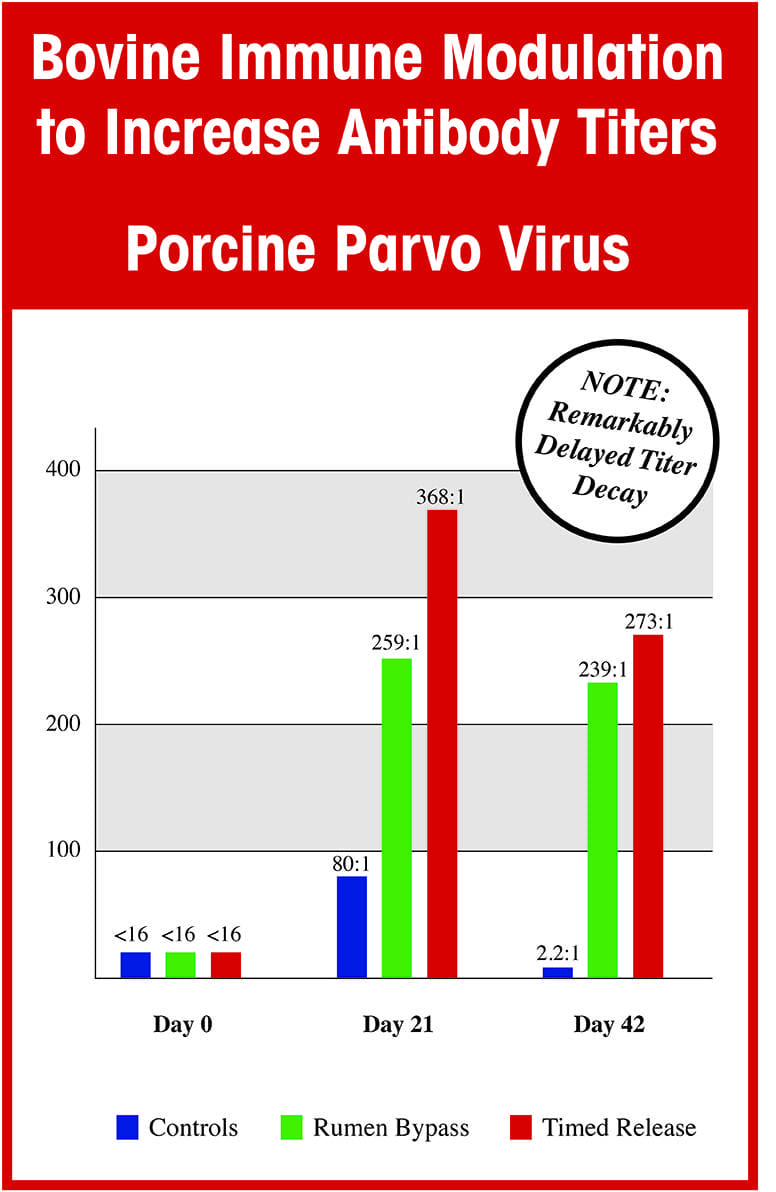
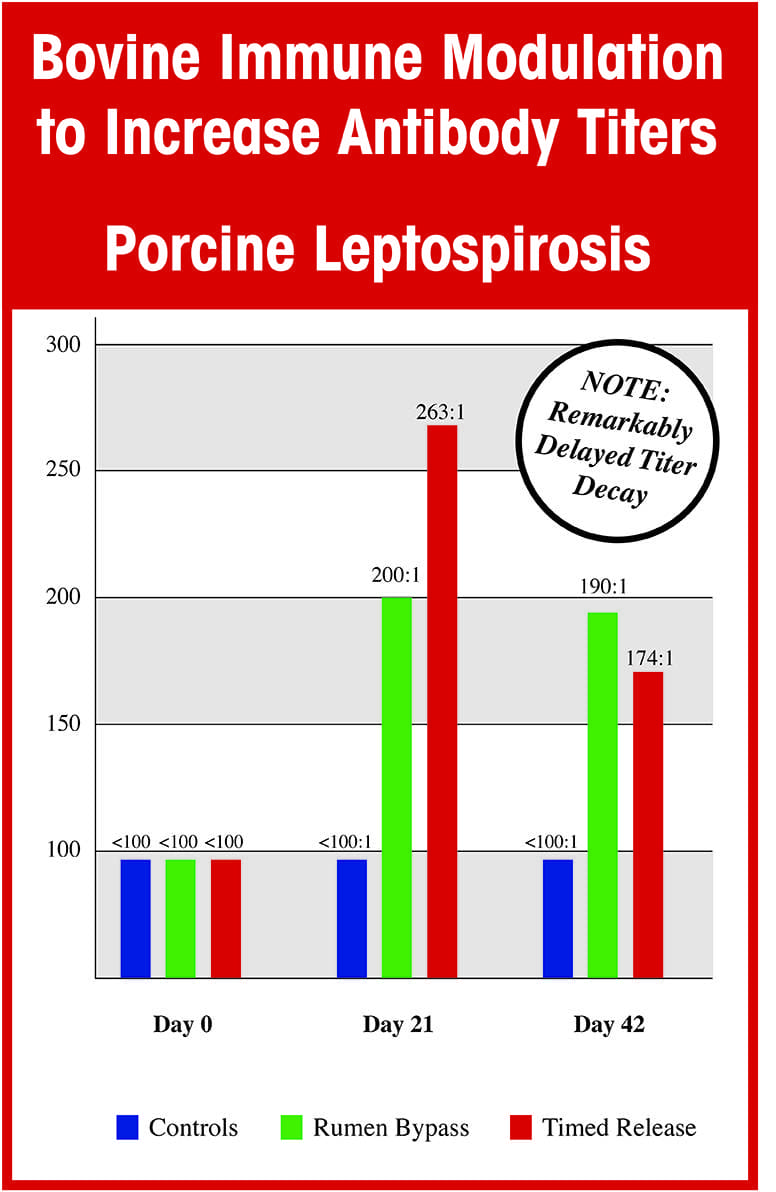
On day 1, all cattle received the same worming and vaccine protocols. In addition, all cattle received a porcine, slow-release parvovirus and 5-way leptospirosis vaccine by Solid Tech Bacterin.

All cattle were bled on day 0 for baseline titers for porcine parvovirus and leptospirosis.

On day 12, all cattle received standard vaccine boosters, and the study groups received their second dose of Adult Immune Primer.

On days 21 and 42, all cattle were bled and weighed.

Observations on Chuteside Manner by Dr. McClung:

By the second day, ALL of the Treated calves suddenly stopped bawling and were feeding. On Days 3 & 4, compared to the controls, all the treated cattle had full bellies and appeared much more active.

On day 10, it was observed that some of the groups were visibly depressed and starting to show some respiratory signs. By day 12, 8 of the Adult Immune Primer group and 3 of the Adult Immune Primer Sustained Release with Minerals group had respiratory signs.

On day 16, Dr. McClung decided to mass treat the Adult Immune Primer group with antibiotics and 2 of the Adult Immune Primer Sustained Release with Minerals group.

On day 21, Dr. McClung repeated the Adult Immune Primer group’s antibiotics and re-bled all cattle in the study. After suspecting a vaccine failure and consulting with the manufacturer, Dr. McClung sent in titers for IBR, PI3, BVD, and BRSV. The manufacturer also suspected a vaccine failure or virus mutations. This was the first time in 5 years that Dr. McClung had problems with immune supplementation and vaccine response.

On day 42, all cattle were re-bled and weighed.

SUMMARY: Chuteside Manner

  • Essentially all cattle in the study had zero starting titers for the swine vaccines.
  • Both viral and bacterial components of the vaccines responded very strongly to Natural Immune Supplementation. And ranging from a 320% to 500% increase in titers.
  • Also discovered was a delayed loss of vaccine immunity, or in other words, a Prolonged Duration of Immunity.
Posted on

Calf Sickness Can Cost

Calf Sickness can Cost.

Although this article is dated, it demonstrates the hidden costs of calf illness and how illness early in life prevents maximum performance and limits complete genetic expression.  Using our bovine products from day one will help maximize health, lower drug and labor costs, improve feed efficiency, enhance genetic expression,  improve carcass quality, and increase profits.

Posted on

Thyroid Tumor

Thyroid Tumor

THYROID TUMOR KEY POINTS:

  • Natural Immunotherapy offers another mode of tumor therapy when chemo, radiation, or surgery aren’t options
  • Natural Immunotherapy is very safe and economical when compared to traditional therapy options

Patient: Choco

Age/Sex/Breed: 12-year-old male Chocolate Lab

Prior History:

03/05/08 – Choco was examined at a local veterinary hospital for difficulty swallowing and a mass under the neck. The mass was firmly attached to the larynx and measured approximately 4cm. An excellent diagnostic workup was performed at that time. A fine needle biopsy of the laryngeal mass revealed a thyroid tumor. Due to Choco’s age, the owner declined an oncology consult and/or surgical therapy.

Current History:

Almost one year later, Choco was presented to me with an ongoing thyroid mass and a lick granuloma on his right paw. The mass now measures 8 cm x 5.5 cm and is firmly attached to the larynx on three sides. The owner was interested in natural immune therapy to help his dog.

Diagnostics:

Prior fine needle aspirates revealed a thyroid tumor.

Therapy:

01/26/09 – We started the Veterinary Immune Tabs

02/09/09 – The thyroid mass had shrunk to 7.5 cm x 4.5 cm in just two weeks! He had a lick granuloma on his right front paw that had shrunk some to 2.5 cm x 3 cm.

03/09/09 – The thyroid mass continued to shrink to 4.5 cm x 3.5 cm! This represents a nearly 50% reduction in size over just 7 weeks. The lick granuloma is continuing to soften and feel less inflamed.

Assessment:

Using the Vet Immune Professional Tabs in cases like this provides me with another therapeutic option that is not available in any other supplement or medication. Immunotherapy can help resolve chronic and previously untreatable conditions while also markedly improving the patient’s Overall Wellness level. I use these supplements in almost all of my geriatric patients. Owners are very interested in providing their pets with a natural therapeutic option when other forms of therapy are not feasible.

Thyroid Tumor
01/26/2009: Started therapy. Front view: notice swelling protruding under the right side of the chin. The thyroid mass measured 8 cm x 5.5 cm.
Thyroid Tumor
01/26/2009: Right front foot: Chronic lick granuloma measuring 3 cm x 3 cm
Thyroid Tumor
01/26/2009
Thyroid Tumor
03/9/2009: After 7 weeks of therapy, the thyroid mass measured 4.5 cm x 3.5 cm, with almost 50% regression!!

Attending veterinarian: Dr. Bill Burlingame


Professional Formula for Dogs and Cats

Vet Immune Professional Products are our professional veterinary immune products for dogs and cats. The powder and tabs are formulated for therapeutic use in animals as an adjunct to chemotherapy, surgery, or radiation. Incorporate the immune powder and tabs into any holistic or Western medicine therapy plan.

The owner’s feedback is excellent when using our Vet Immune Professional Products for cancer patients. This formula offers pet owners a viable alternative for therapy when chemo, surgery, or radiation is not an option. It also provides excellent nutritional and patient support when used adjunctively with traditional cancer therapy protocols.

Dr. Ramaekers’ Vet Immune Professional Products addresses several areas of need in these critically ill patients.

Applications

  • Auto-Immune Disorders
  • Dermatitis~ Bacterial & Fungal
  • Allergies-respiratory & skin
  • Bone Marrow Dysfunction/Pancytopenia/
  • Lymphocytic Leukemia
  • Vaccine Response Enhancement
  • Improved Athletic Performance & Endurance
  • Anti-Viral Effects
  • Stress-induced diarrhea
  • Degenerative Joint Disease/Arthritis
  • Tumor Size Reduction
  • Thyroid Conditions
  • Canine Cancers~ Benign & Malignant

The patented Transfer Factor and Medicinal Mushroom blend significantly enhances immune function, helping to combat cancer on a cellular level. Medicinal mushrooms offer anti-angiogenic properties that help starve the tumor of its essential blood supply, thereby improving cellular energy production (ATP) and lung oxygen absorption.