Posted on

Turkey Study

Turkey Study.

Platte, S.D. 2008

Turkey Study: 9,300 Birds From The Brooder To The Finish

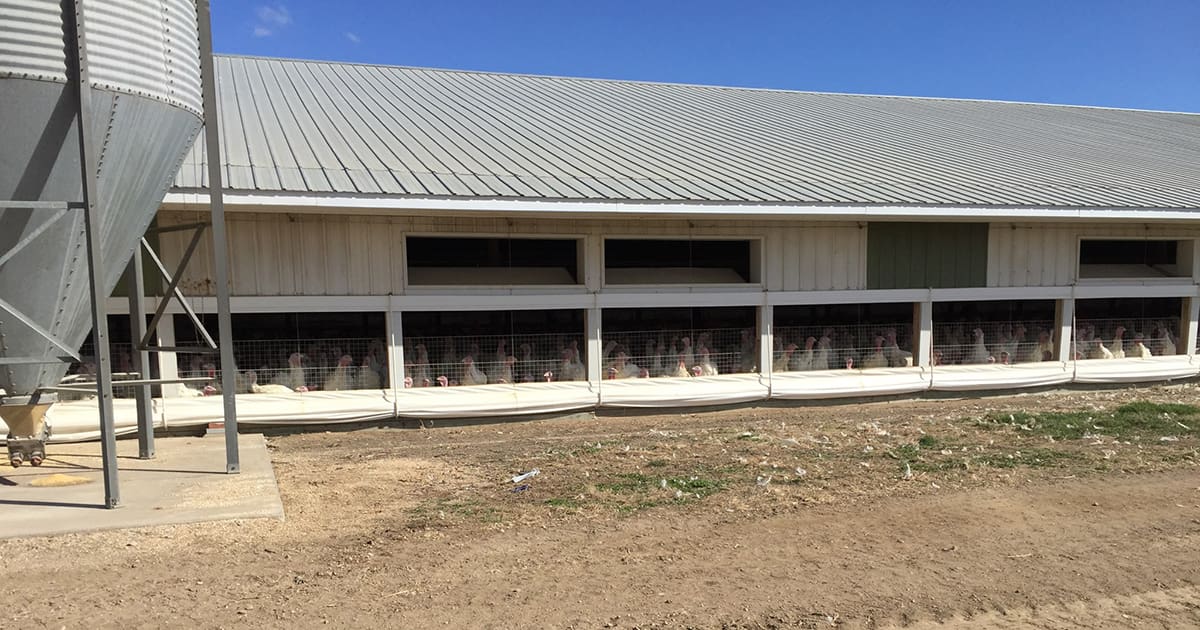
In 2008, a trial involving 9,300 birds was conducted at Platte Colony in Platte, South Dakota. The purpose of the trial was to evaluate the efficacy of the Poultry Immune Formula on growth, feed efficiency, mortality rates, and overall condemnation.

An additional control group of 9,300 poults was housed in the same facility, separate from the test birds. The Poultry Immune Formula was administered at a rate of 1 ounce per 100 birds, mixed into a minimum of 2 tons of feed, and was provided until it was finished. This process was repeated every 21 days for a total of six administrations until the birds were shipped.

Turkey Study
Test Birds
9300
Control Birds
9300
Test VS. Control
Outcome
14-Day Mortality1.55%1.42%-0.13%
Total Livability91.20%89.94%† 1.26%
Day to Market140141† 1 less day (1.007%↓Day to Market
Total Sold84828364† 118 More to sell (118 less mortality on Feed)
Total # Sold340145325945† 14,200 # More Turkeys Sold
Avg. Live Wgt40.1#38.97#†1.13# (Increase Bird Weight)
ADG0.28640.2764†1.04% (ADG)
Feed Conversion2.547/#Gain2.621/#Gain† .73 Improvement in Feed Conversion
•Industry Standard .01/# Improvement in feed conversion -BIG
•2.2# Feed Savings/Bird
•2.2# × 15¢/#Feed = 33¢ Savings/Bird
$ 2802.36 Feed Savings (33¢ × 8492) Bird
Overall Condemn1.39%1.41%† .02% (Less Condemned)
•.02% × 8482 = 16.96↑Bird Sold
• 16.96 Bird ×40.1 # Avg Wgt = 680.1#↑
•680.1# × .50011¢/# = $340.73↑$
$ GAINED IN TREATED GROUP
↑ 14,200# Sold × .5001¢/#$7,101.42
Feed Savings – Conversion ↑$2,802.36
↓Condemnation$340.73
Total Gained 8482 VS. 8364$10,244.51
* $1.22 Gained/ Bird on Test over Control
* † $10,244.51 -$3,500.00 Input = $6,744.51 NET GAIN (65.8%Improvement over Inputs)
*Average House will have 20-30,000 Birds – Potential ↑ $20,242.53/House
Posted on

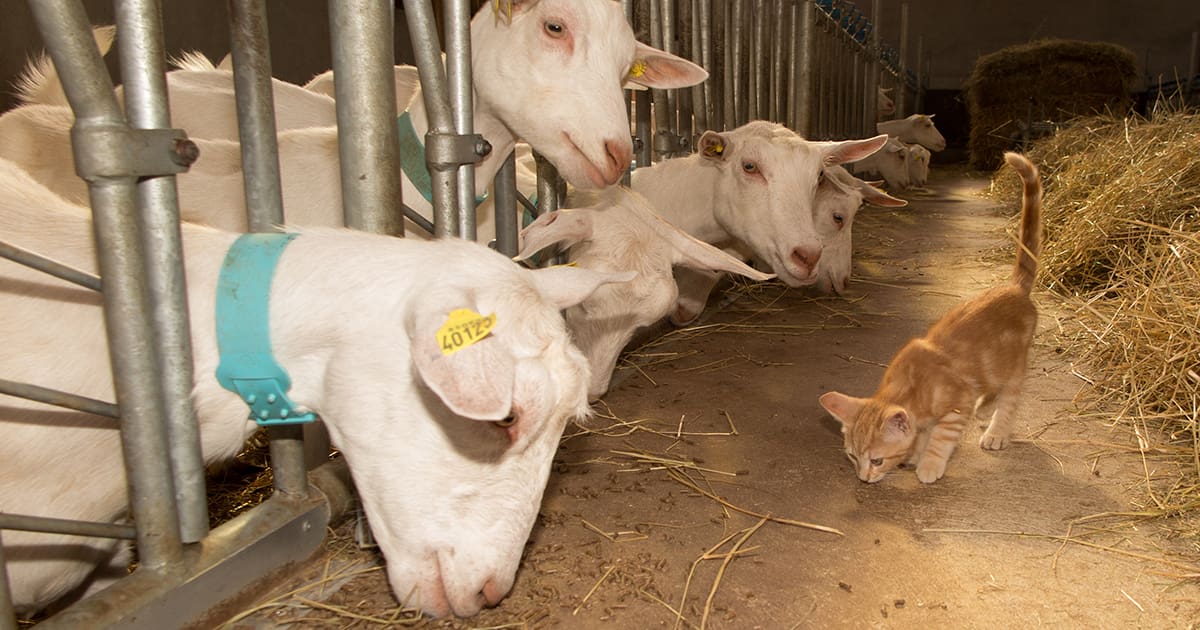
Goat Facts

Goat Facts.

Information compiled by Dr. Bob McClung

Goats are intelligent, social, and challenging to herd

Goat Facts: Goats are versatile, domesticated animals that are kept for their meat, milk, and fiber. The domestic goat is a species of goat-antelope mostly kept as livestock. It was domesticated from the wild goat of Southwest Asia and Eastern Europe. The goat is a member of the family Bovidae, meaning it is closely related to the sheep. 

Goat Facts:

  • First tamed by humans 9-10,000BC
  • Member of the cattle family
  • 210 breeds with 450 million worldwide (4-6% in the USA)
  • China has the most goats at 170 million
  • Goats’ eyes are rectangular in shape instead of oval
  • They have good night vision
  • Goats are bred for milk production, meat, skin, cashmere, mohair, and as pets.
  • Life span is 8-12 years, with exceptions of up to 15+ years
  • Worldwide, more people eat or drink milk from goats than from any other species
  • Goats don’t like to get wet and will seek shelter when it is raining
  • Goats are very susceptible to parasites
  • Goats deposit fat internally and less externally than sheep and cattle; therefore, they have more fat around their organs.
  • Goat milk is hypoallergenic and higher in Calcium and Vitamin A than cow’s milk.
  • Goat milk is naturally homogenized and can be digested in less than 20 minutes, while cow’s milk may take all day.
  • Goat meat has less fat and cholesterol than beef, pork, mutton, or poultry.

More Goat Facts:

  • Coffee was first discovered when herders noted that animals became very energetic after nibbling on coffee beans.
  • Dairy goats produce 2-3 quarts of milk per day, or approximately 5,000 gallons of milk per year, with some improved milkers producing more than 1 gallon per day.
  • Goats can consume 3-5% of their body weight of dry matter on good pasture and less on poor pasture.
  • Market infrastructure is disorganized in the movement from farm to consumer
  • Some goats have milked up to 5 years after only one gestation
  • Goats don’t have tear ducts
  • Goats’ primary illnesses are coccidiosis, parasitic worms, and pneumonia
  • Goats don’t like to eat feed that has been soiled, contaminated, or has been on the ground
  • Some naturally polled goats are also infertile (male or female)
  • Goats like to eat woody plants and are utilized as pre-grazers in the West to improve pastures for cattle, e.g., leafy spurge
  • Azaleas are poisonous to goats
  • Vomiting is almost always a sign of poisonous plant consumption
  • Lactating in close contact with “musty” bucks may produce “goaty” tasting milk and may be offensive.

Parasite Strategy

  • Feeding a coccidiostat in the feed for 2 weeks to late-gestating animals decreases the environmental load and the passage of Coccidia from adults to young.
  • Always use Coccidiostat in the starter or creep feed
  • Have a clean and dry environment
  • Coccidia is worse in cold and wet times of the year

Worm Strategy

  • Inhibition-heavy loads of worms change the pH of the gut and cause ½ of the worms to cover their mouth parts with membrane and leave the body for the new host: parasite survival techniques
  • We have learned that the food source in the worms’ bodies only lasts 42 days
  • Don’t pasture for 45 days after 1st green grass
  • ½ of the worms starve on the pasture. This is a great time to worm goats in the 45-day inhibition phase
  • Parasites lose resistance to wormer in 18 months
  • Use wormers strategically and rotate
  • Spring-August 30, 30 days before kidding
  • Deworming is performed within 30 days before kidding to prevent the transfer of parasites from the nanny to the kid.

Breeding Facts

  • Age of puberty: female 7-10 months; male 4-8 months
  • Breeding age male 8-10 months
  • A healthy buck can breed 20-40 does
  • Gestation length 146-153 days
  • Females 80# body weight, time to breed, or 75% of adult weight
  • Estrus length 12-36 hours
  • Signs are tail wagging, mucous discharge, swollen vulva, bleating, mounting, or being mounted.
  • Female adult weight 22-300# breed dependent
  • Male adult weight 27-350# breed dependent
  • Goats can deliver up to 3 litters of kids in 2 years
  • Goats can deliver 1-5 kids/gestation

Odd Reproduction Problems of Small Ruminants

  • Ringwomb
  • No consistent predispositions, etiology unknown

Theories:

  • Genetic link-autosomal recessive
  • Lack of release of hormones that soften cervical collagen
  • Infectious in nature (unlikely)
  • Estrogens in feed, moldy feedstuffs
  • It may or may not recur in the same female
  • Manual dilation doesn’t work- still left with a thin band of cervical tissue
  • No studies clearly document the efficacy of any drug or treatment to complete dilation

Treatment:

  • Not advised to pull. Will get hemorrhage and death of neonate +/- dam
  • Cesarean

Goat Facts: Abnormal udder development

  • Rare in sheep, common in goats
  • Precocious udder development
  • Young, unbred goat
  • Glands produce normal, mild

Treatment

  • Prostaglandin, then FSH if it fails
  • Do not milk out
  • Cease grain

If a goat is not for show, do nothing

Pseudopregnancy (Cloudburst pregnancy)

  • Goats have never been reported in sheep
  • Unknown etiology
  • Accumulation of fluid in the uterus
  • It may or may not have udder development
  • Treatment is Prostaglandin because a CL is persistent. To prevent this, some breeders breed on the first cycle.
  • The goat is anestrus during this time but remains fertile.

Spontaneous Lactation

  • It seems to be relatively common and of no consequence
  • Unknown etiology
  • Estrogens in feed, estrogens from an abnormal ovary
  • Mastitis

Treatment

  • None required
  • Can try hormonal therapy
  • Mastectomy, ovariectomy, ovariohysterectomy

Goat Facts: Tips on Natural Synchronization

  • Remove bucks from sight, sound, and smell 2-3 months
  • Start to flush 2-3 weeks before breeding
  • Deworm 2 weeks before breeding
  • Pen “teaser bucks” or bucks in nannies to breed
  • 15 days before the breed turns out on the desired breed date (male odor, behavior stimulates synchronization of estrus)
  • We also use 9mg/# of LA200 2 weeks before breeding to decrease Chlamydia, Campylobacter & Lepto

Shop Goats and Sheep: Immune System Enhancement and Support

Livestock Products for Goats and Sheep

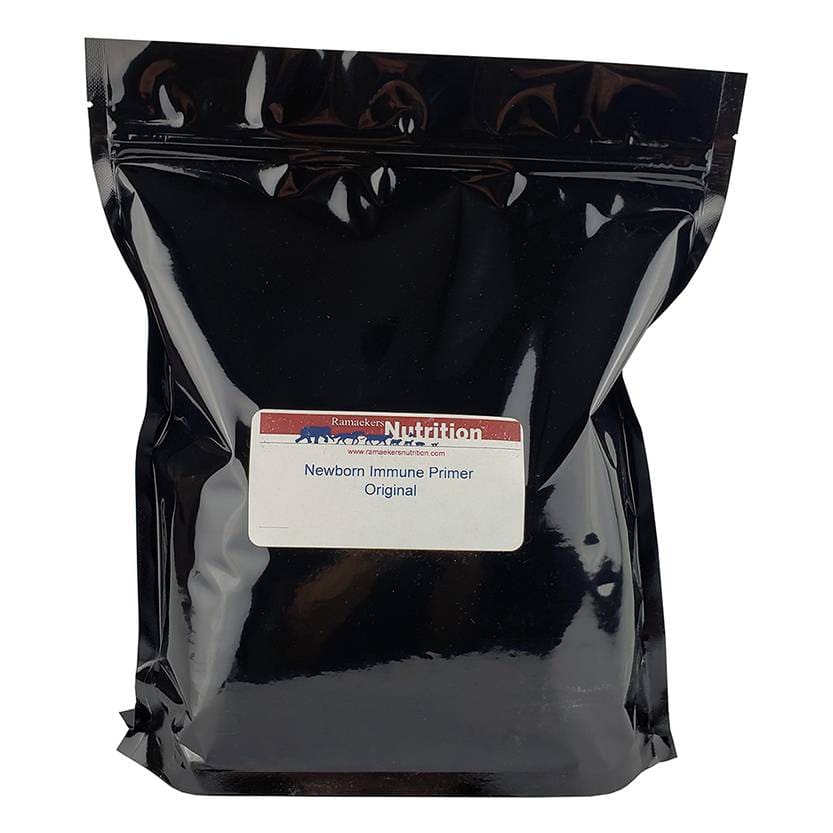
Newborn Immune Primer Original

Our unique Newborn Immune Primer formula for goats and sheep helps educate and boost the immune system for overall health and vitality. 


Newborn Stress Premix

Our unique Newborn Stress Premix formula for goats and sheep helps educate and boost the immune system for overall health and vitality. 


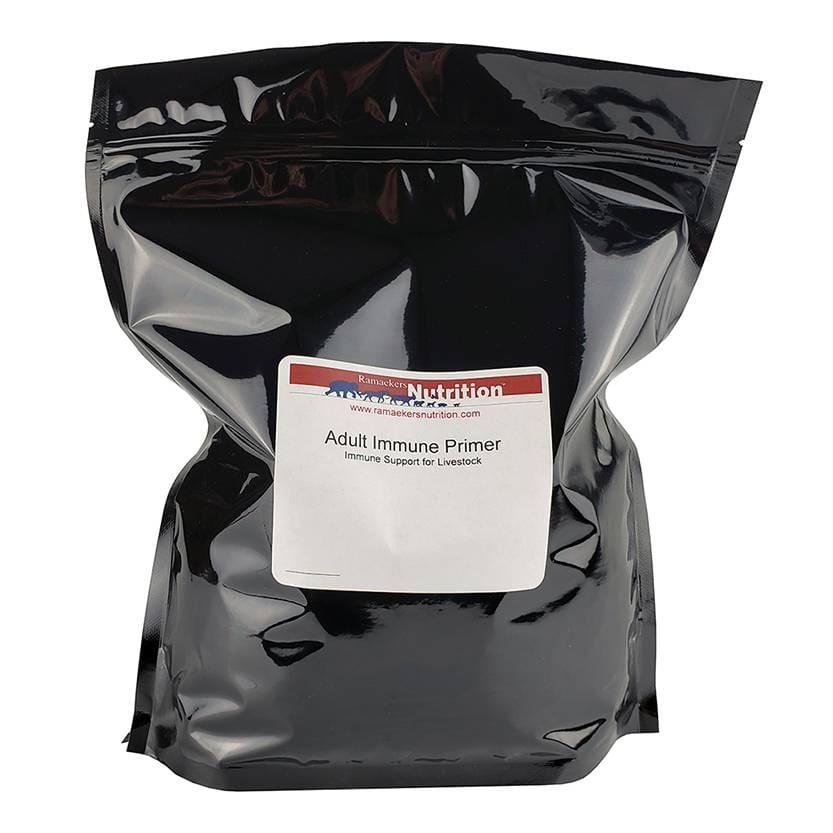
Adult Immune Primer Support

Our unique Adult Immune Primer Support Livestock formula for goats and sheep helps educate and boost the immune system for overall health and vitality.


Adult Stress Premix

Our unique Adult Stress Premix formula for goats and sheep helps educate and boost the immune system for overall health and vitality.


Posted on

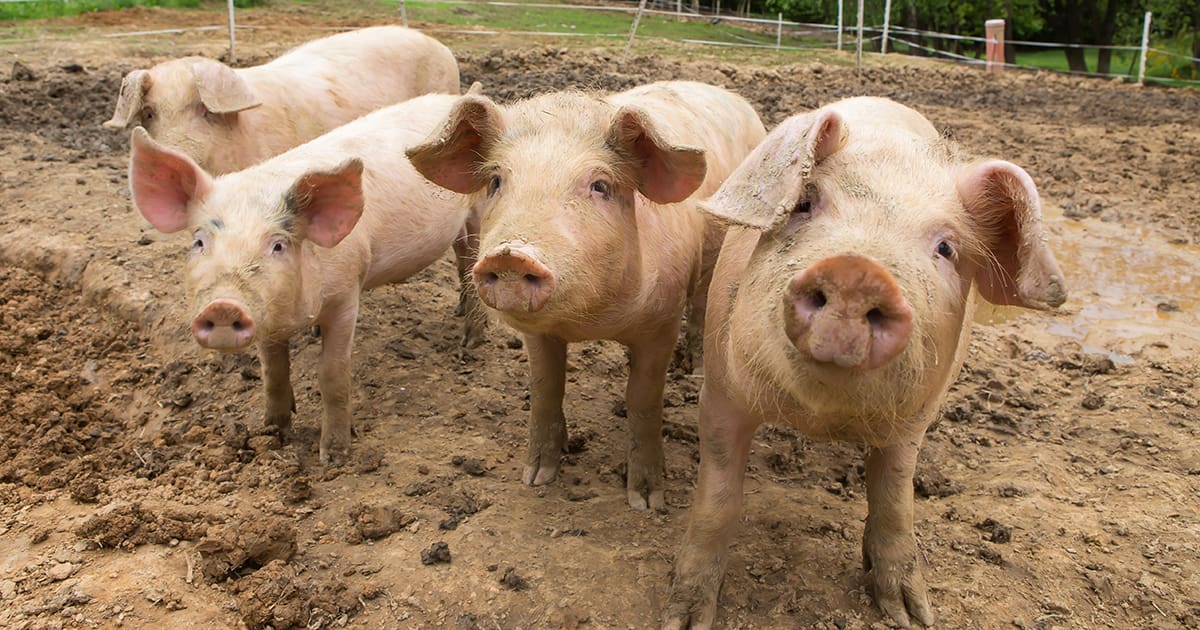
Runtbuster

Runtbuster 2009.

Two Trials

Runtbuster 2009: Trial 1

Total # Pigs in Study: 110
Treatment group avg. weight gain advantage at weaning: 1.41 lbs
Treatment group avg. weight gain advantage at 65 days: 3.93 lbs
0 Deaths Treatments: 10 Deaths Controls

Controls:

Total # Pigs: 65 (-3)
Average Weight at weaning 9.96296
Max 15
Min 7
Mode 10
Average Weight at 65 days: 58.46154
Max 67
Min 50
Mode 60

Treatment:

Total # Pigs: 64
Average Weight at weaning: 11.37500
Max 15
Min 8
Mode 11
Average Weight at 65 days: 62.39063
Max 67
Min 52
Mode 63

Sows were randomly assigned to either a control or treatment group. RUNTBUSTER product administered:
{1} At processing – Teeth Clipping / Tail Docking @ Day 1
{2}
At Castrating @ Day 8
{3}
At Weaning @ Day 17

Runtbuster 2009: Trial 1 Chart
Trial 1
Trial 1: 65 Day Chart
Trial 1: 65-Day Chart

Click here to view more data from trial 1

Runtbuster 2009: Trial 2

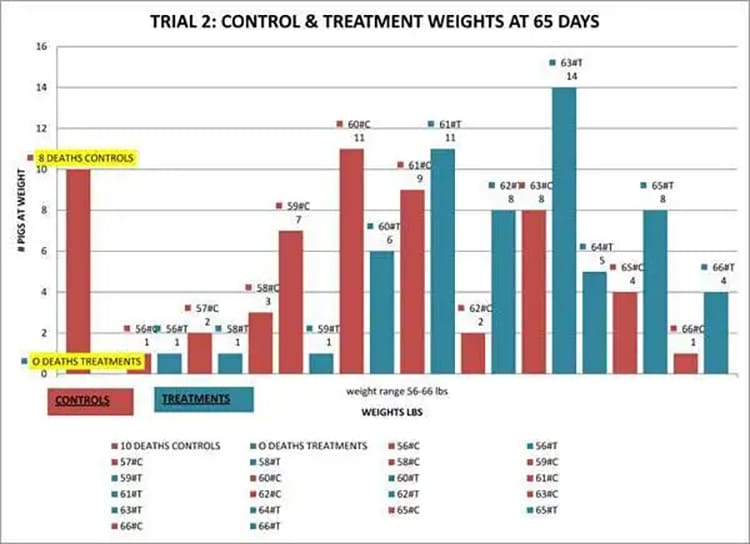
Treatment group avg. weight gain advantage at weaning: 1.875 lbs
Treatment group avg. weight gain advantage at 65 days: 1.642 lbs
0 Deaths Treatments: 8 Deaths Controls

Controls:

Total # Pigs: 52
Average Weight at weaning: 9.875
Max 15
Min 7
Mode 10
Average Weight at 65 days: 60.833
Max 66
Min 56
Mode 60

Treatment:

Total # Pigs: 58
Average Weight at weaning: 11.75
Max 14
Min 9
Mode 11
Average Weight at 65 days: 62.475
Max 66
Min 56
Mode 63

Pigs were randomly assigned to either a control or a treatment group. RUNTBUSTER product administered:
{1} At processing – Teeth Clipping / Tail Docking @ Day 1
{2}
At Castrating @ Day 8
{3}
At Weaning @ Day 17

Runtbuster 2009. Trial 2 Chart
Trial 2
Runtbuster 65 Day Trial 2.
Trial 2: 65-Day Chart

Click here to view more data from trial 2


Livestock Stress Pack

The Livestock Stress Pack is a wellness product designed for livestock and companion animals. It provides animal health support during the stresses associated with birthing, performance, or travel.

Description

The Livestock Stress Pack provides essential vitamins, minerals, electrolytes, probiotics, mushroom extracts, and the immune-boosting power of transfer factor.

Transfer Factor Technology

Trust transfer factor technology to optimize immune system function. While many products use single, rudimentary ingredients known to aid immune health, Ramaekers Nutrition delivers the only immune support products harnessing transfer factor supported by a unique, patented blend of essential nutrients and potent nutraceuticals. See our Mission.

Patented Formulas

Our patented formulas use transfer factor technology. These formulas are derived from a proprietary blend of bioactive peptides based on the synergistic effect of combining naturally sourced biologically active peptides (transfer factor).

These bioactive peptides are extracted from bovine colostrum and egg yolks. This blend combines unique plant-derived heteropolysaccharides, lactic acid-producing probiotics, and highly bioavailable micronutrients. Combining these immune-active ingredients enables a significantly enhanced immune response in equine health without adverse effects. For example, see Bovine ProductsCanine ProductsFeline ProductsEquine Products, and Other Livestock Products.

Unique Formulas

Our unique formulas help educate and boost the immune system for overall health and vitality. In short, immune education starts at birth and should continue throughout life with our patented products.

Ramaekers Nutrition’s products reflect a culmination of global research and clinical experience. Dr. Ramaekers is passionate about improving animal welfare. He is proud to be on the cutting edge of veterinary medicine (meet our veterinary team) and nutrition. Learn more about Ramaekers Nutrition.